The U.S. will allow up to 100,000 metric tons of ground beef to enter the country per month at an
in-quota rate for 90 days starting Sept. 1, according to an Aug. 26 proclamation; however, the beef’s origin remains a game of 20 questions.
President Donald Trump on Wednesday authorized U.S. Customs and Border Protection to ensure “all eligible countries” have access to the 90-day increase in tariff-rate quotas for ground beef. The proclamation doesn't name any specific countries, instead it says the TRQs will go to “other countries or areas.” This generally applies to nations that don’t have a quota allocation or agreement.
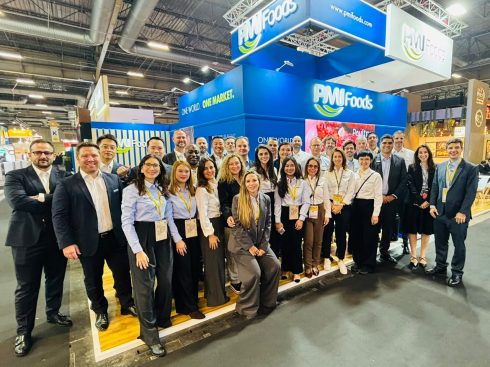
“The meat is coming from the ‘all other category,’ and I believe the ‘all other category’ is basically from South America. I believe it is Brazil and Paraguay,” Darin Parker, the president and founder of PMI Foods, told Agri-Pulse. “I think there might be some also in the Netherlands.”
Uruguay and Argentina have their own quota that is allocated separately, Parker said. The order said it will not impact the 80,000 metric tons of Argentine lean beef trimmings that Trump previously authorized to enter the U.S. in-quota during the 2026 calendar year.
This means between the two orders up to 380,000 metric tons of foreign beef will enter the U.S.
The deal comes less than a month after the USDA’s Food Safety and Inspection Service issued a recall on approximately 29,628 pounds of raw beef products from Argentina, raising concerns about food safety.
The order will allow for a total of up to 300,000 metric tons of beef to enter the U.S. three tranches of 100,000 metric tons, opening the first of each month, September through November. In exchange for adjusting TRQs, exporters agreed to sell lean beef trimmings at 25% below market price in a bid to lower consumer costs ahead of the midterm election.
The White House directed Agriculture Secretary Brooke Rollins and U.S. Trade Representative Jamieson Greer to monitor the lean beef imports to determine whether or not its being sold at 25% below market price. If they find foreign exporters aren’t keeping up with their side of the deal, Rollins and Greer will notify Trump.
The administration’s decision to let in more beef is unlikely to lower consumer costs in the short-term. Parker called the move a “band-aid.”
“Is it anti-inflationary? Yes, but is it going to fix the problem? No. And what's going to happen next year on prices? Prices are going to go up most likely,” he said.
The beef industry also views the deal as a short-term solution to lowering consumer costs that could ultimately harm ranchers. The U.S. Cattlemen’s Association said in a statement that it is "disappointed” with Trump’s order, calling it a “quick-fix” that will leave ranchers paying the price.
USCA President Justin Tupper said in the statement that this could hurt efforts to rebuild domestic herds, which are at the lowest level since the 1950s.
“The biggest piece of the herd-rebuild puzzle is consistent market signals, ones that point to a profitable future for the American rancher in our own market. Agriculture and rural America are struggling for a number of reasons right now; the cattle industry was one of the few bright spots left, yet in just a few short days we have seen that progress effectively reversed," Tupper said.
Parker said there are structural problems that need to be addressed to rebuild the U.S. herd, which could be done through infrastructure projects to manage rainfall or desalination to help with the drought situation – a key challenge in herd rebuilding.
The administration could also establish incentives, but several beef groups and economists have said this deal could potentially be a disincentive.
“It is very expensive to grow an animal. It takes a lot of time, a lot of feed, a lot of energy, right?” Parker said. “But clearly, if we don't invest in the base input, which are cattle, you're never going to be able to change the output, which is the ground beef, right, or the pricing.”
Other questions about the deal persist, including if the 300,000 metric tons of beef, which translates to roughly 661.4 million pounds of beef, will be in addition to exports that were already expected to enter the country.
“The product probably would have not come into the country as fast, but because of the lower duty, people might push forward so that they get more product to be able to utilize the lower duty to lower their costs,” Parker said.
Trump is able to alter TRQs if agricultural products are unable to meet domestic demands under the 1994 Uruguay Round Agreements Act, per the order. The Uruguay Round is one of the largest trade agreements and includes 123 countries, according to the World Trade Organization.